

Shelter Reality: You Cannot Save Them All - At least Not Yet
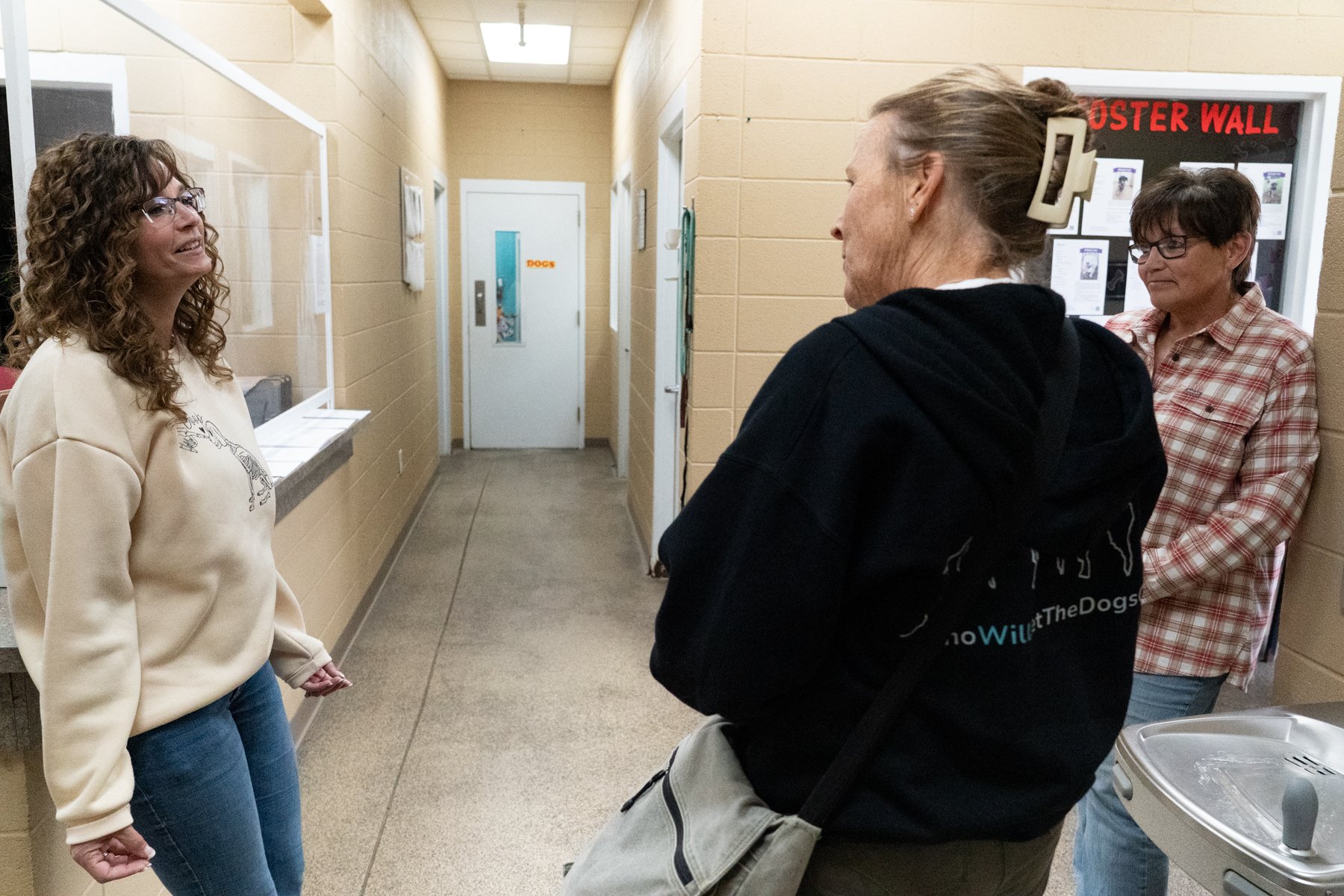
Leslie has been the director of Dekalb County-AL Animal Adoption Center in Alabama for seventeen years. She grew up here, and despite her ever-present smile, this is a hard place for someone with a heart for animals.
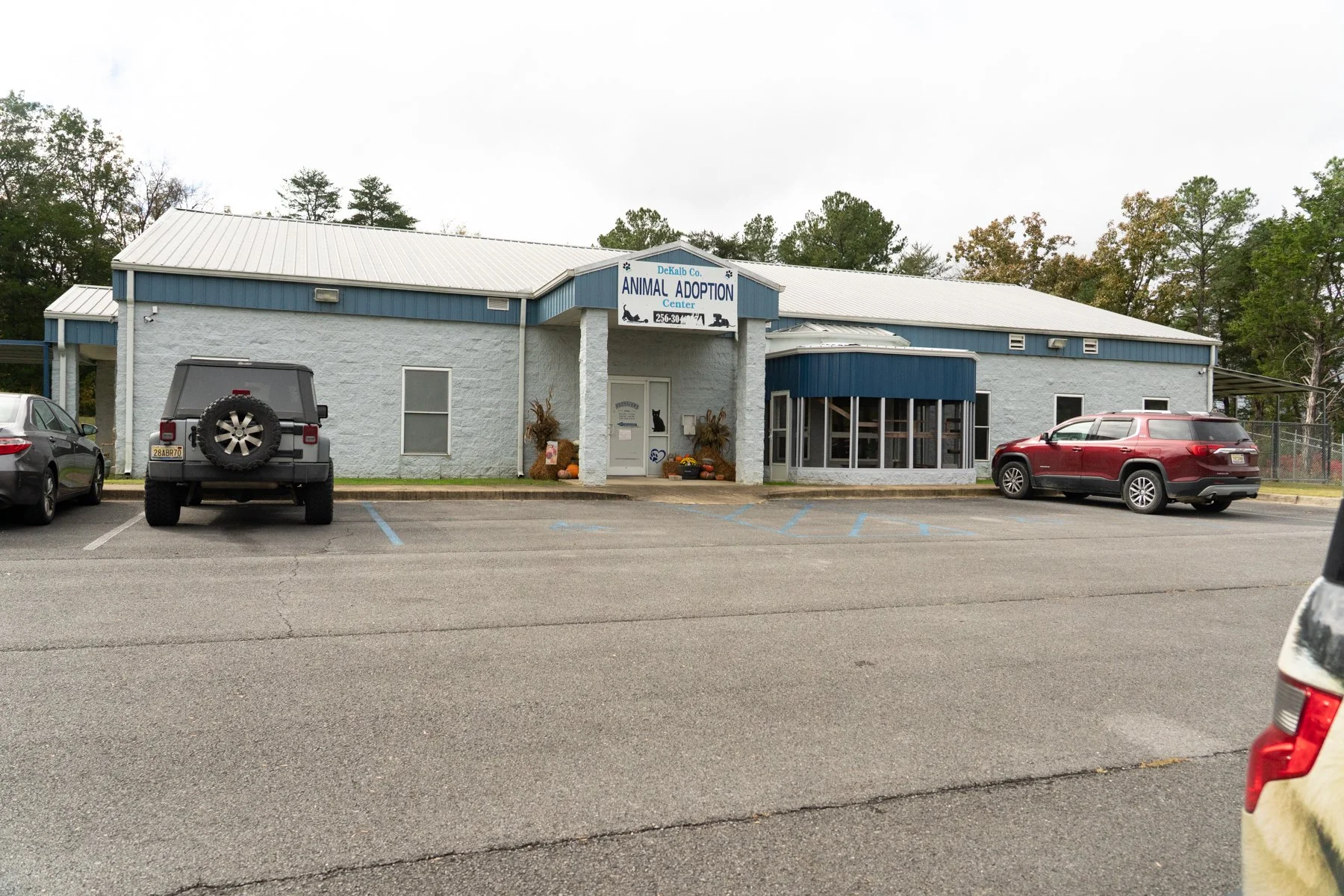
The municipally funded rural shelter handles over 3,000 animals annually. About 50% of those animals make it out through local rescue organizations, but some through local adoptions. Dogs come to the shelter primarily through owner surrenders, often because of economic reasons, but also because the owner is moving, has a life change, or simply no longer wants the animal.
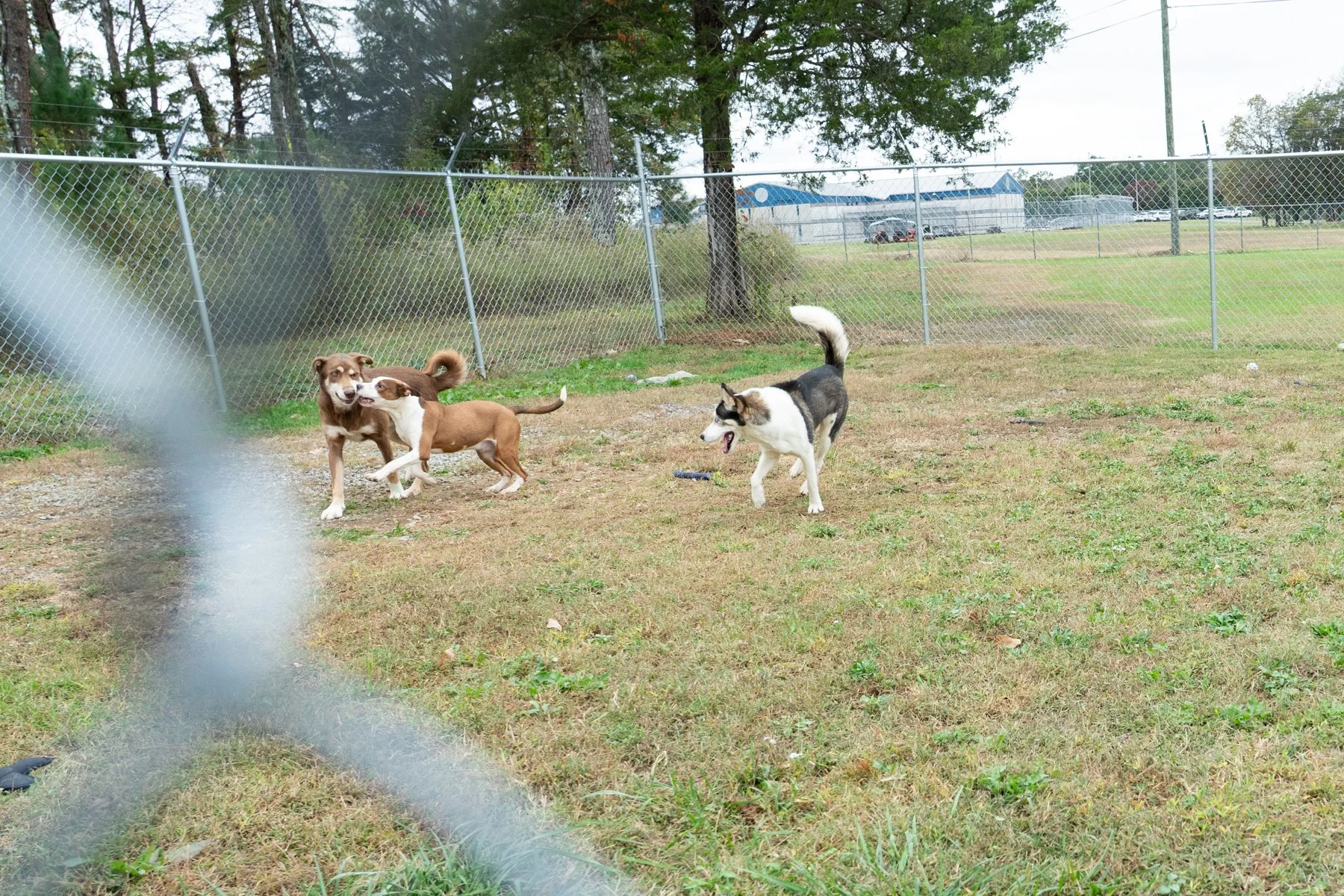
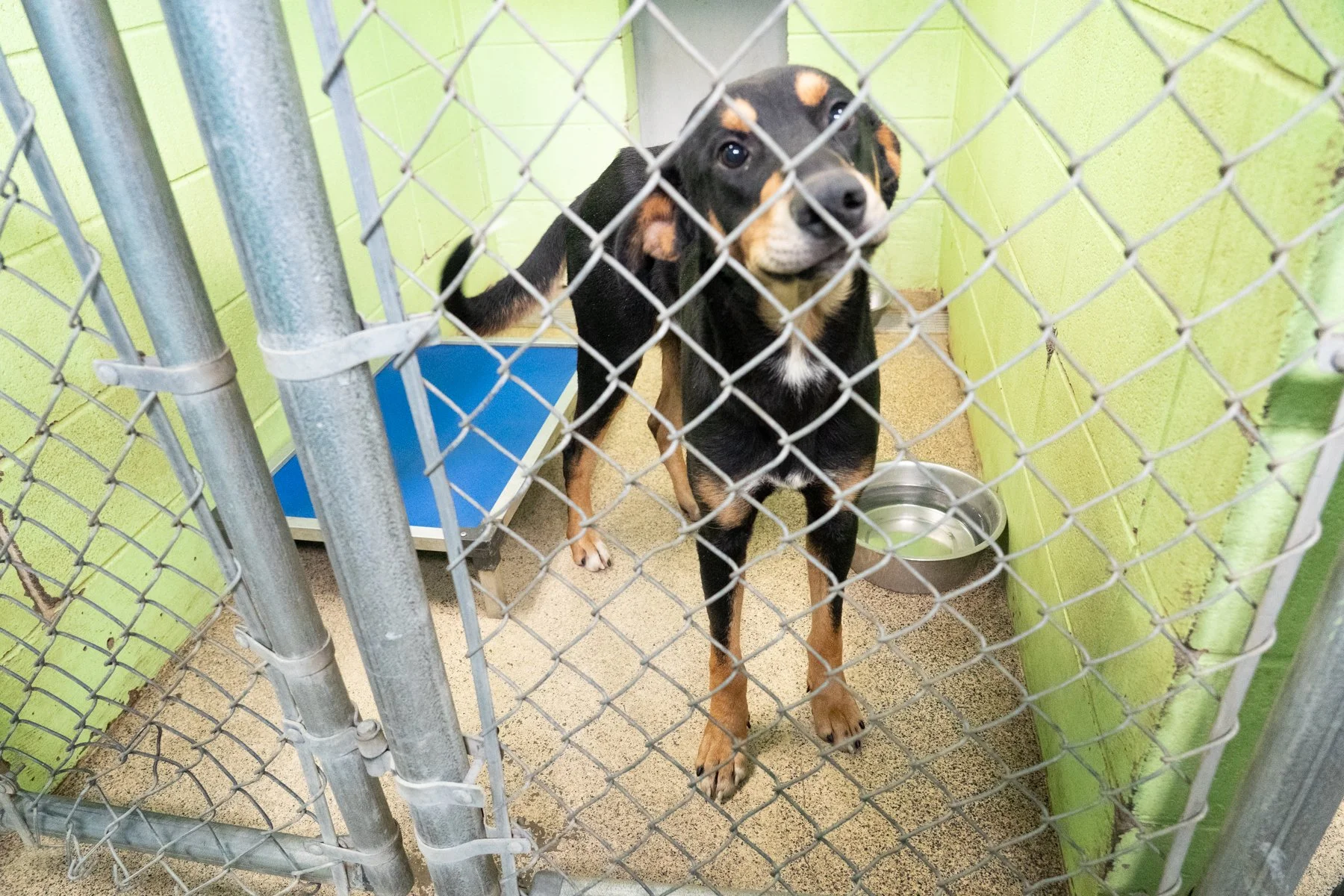
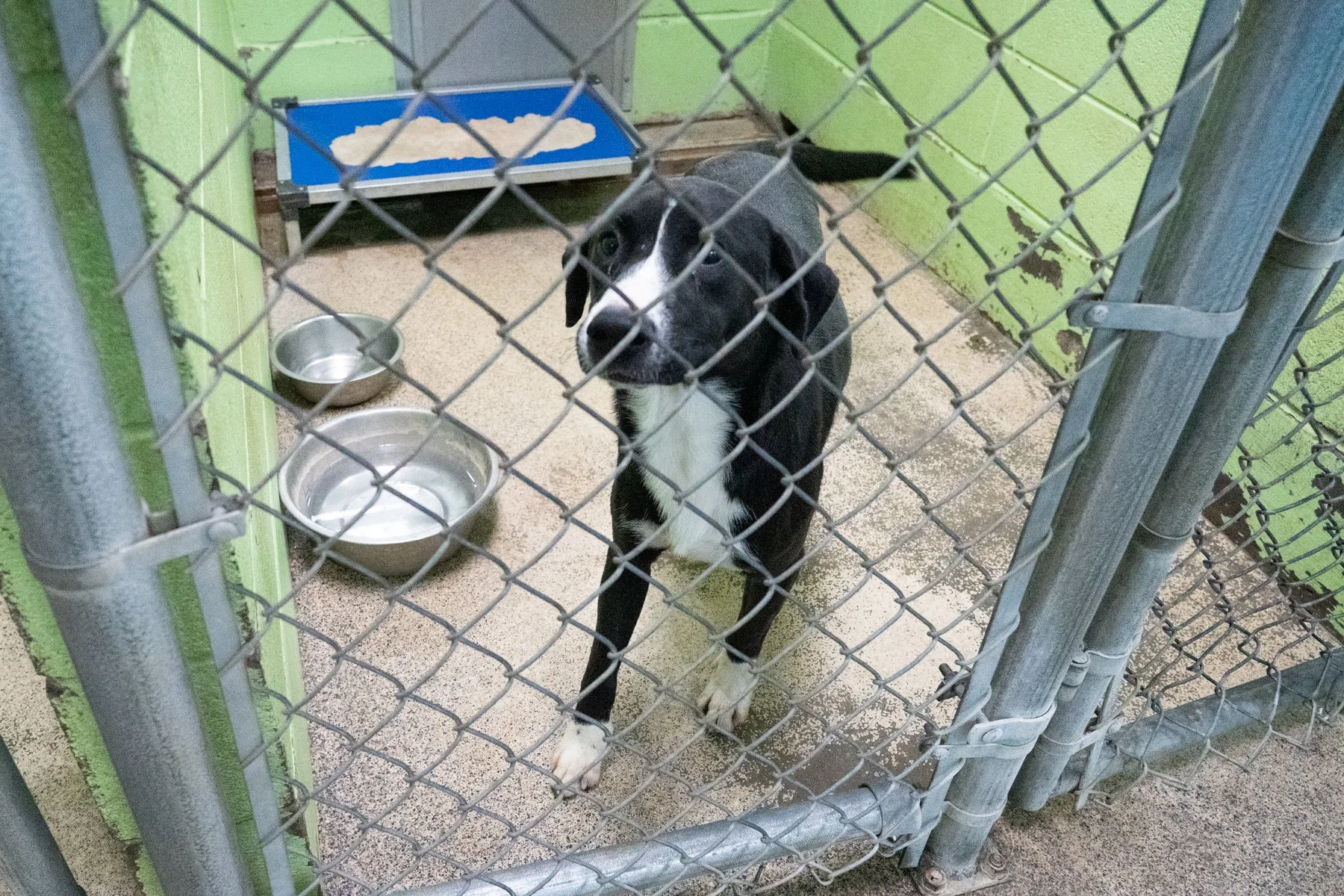
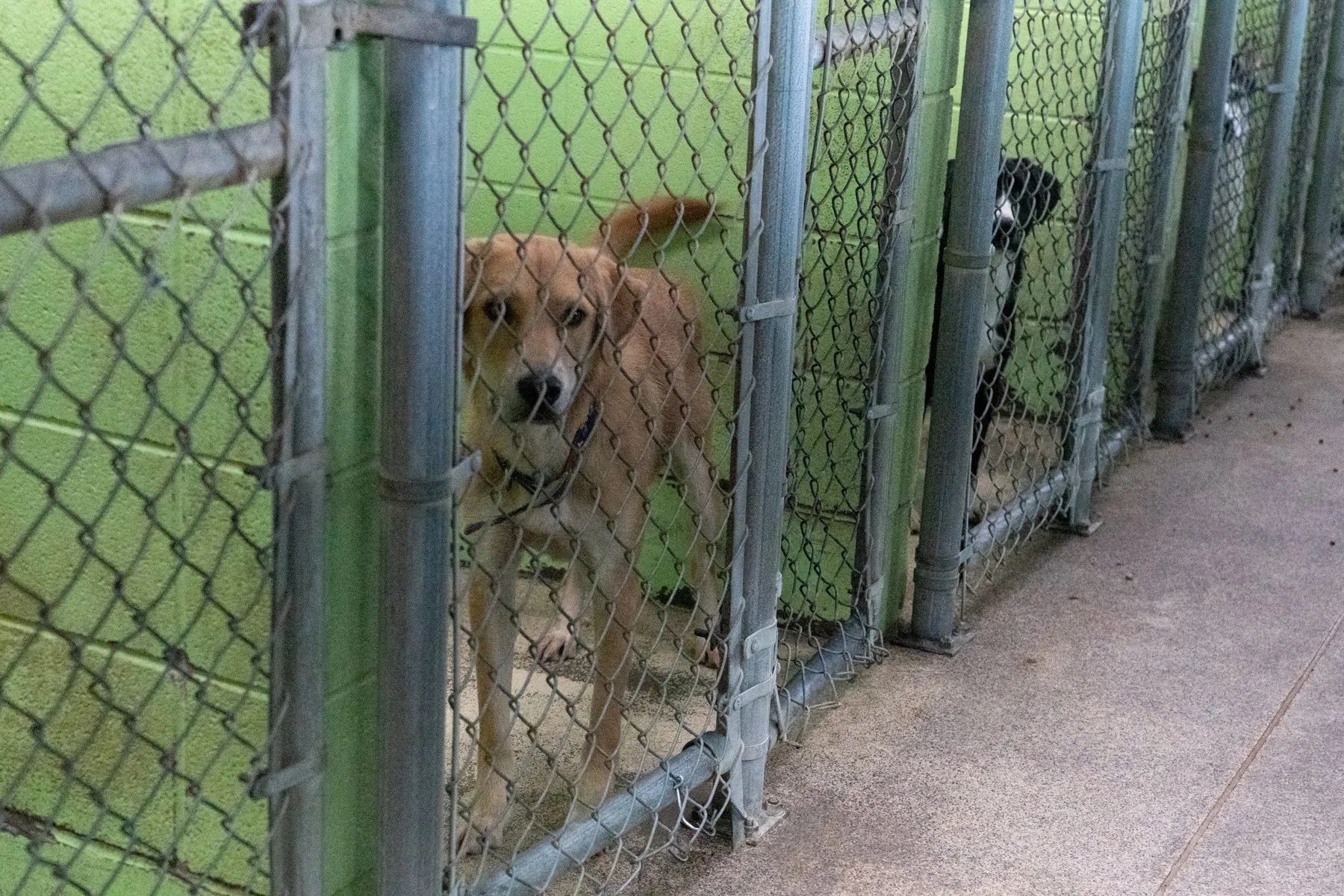
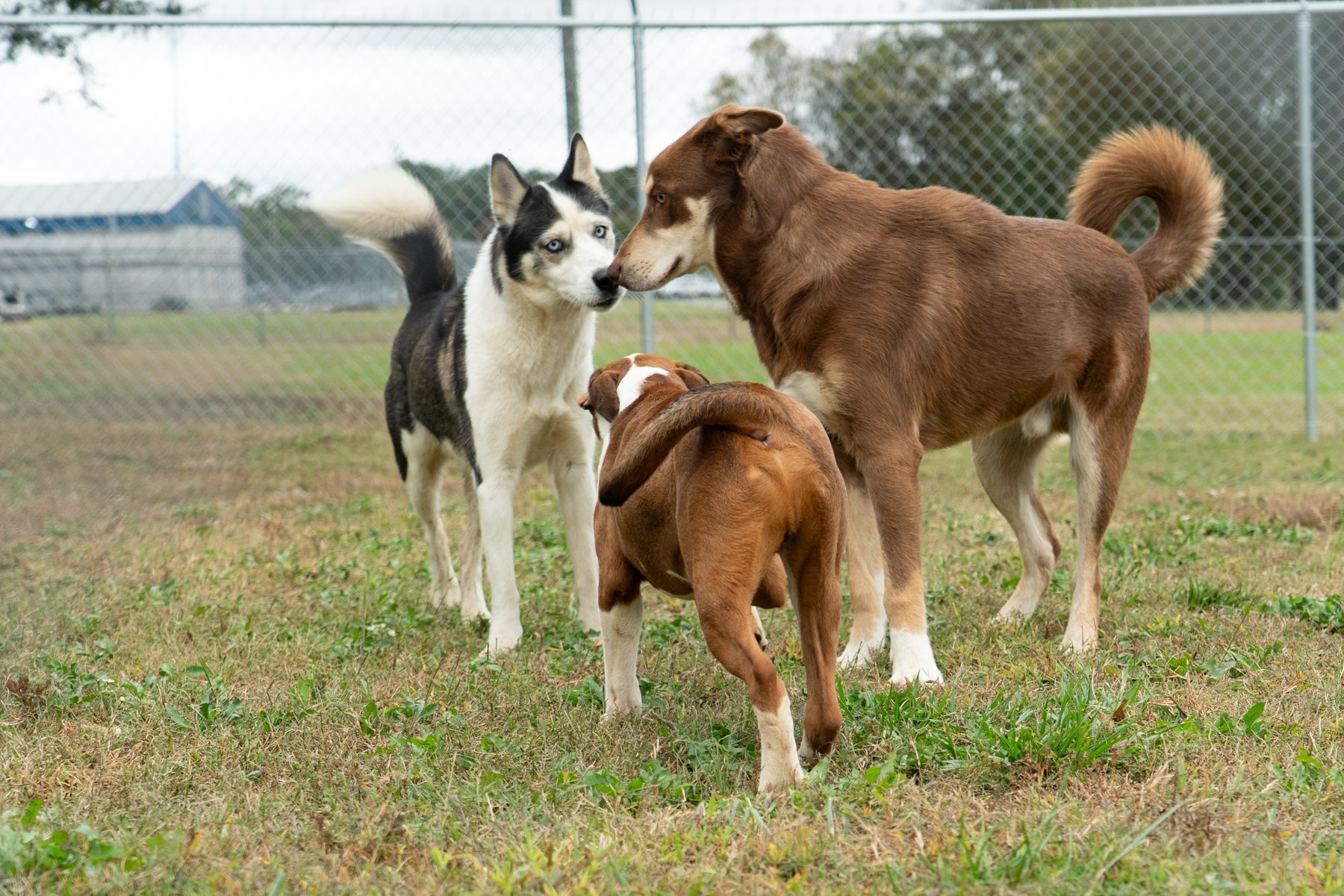
Despite those tough statistics, it is a bright and hopeful place. The dogs are calm in their kennels, initially greeting us and then quieting, many sitting nicely at the front of their kennels for treats. This is likely because they all get out for playgroups in the large fenced area in the morning, and usually get walks with volunteers in the afternoon.
It’s also because the dogs have not been here for months or years, as is the case in some of the shelters we visit. The longer a dog is in a shelter environment, even one like DeKalb that does such a great job of getting them out to play, the more likely the environment will break them down emotionally and mentally.
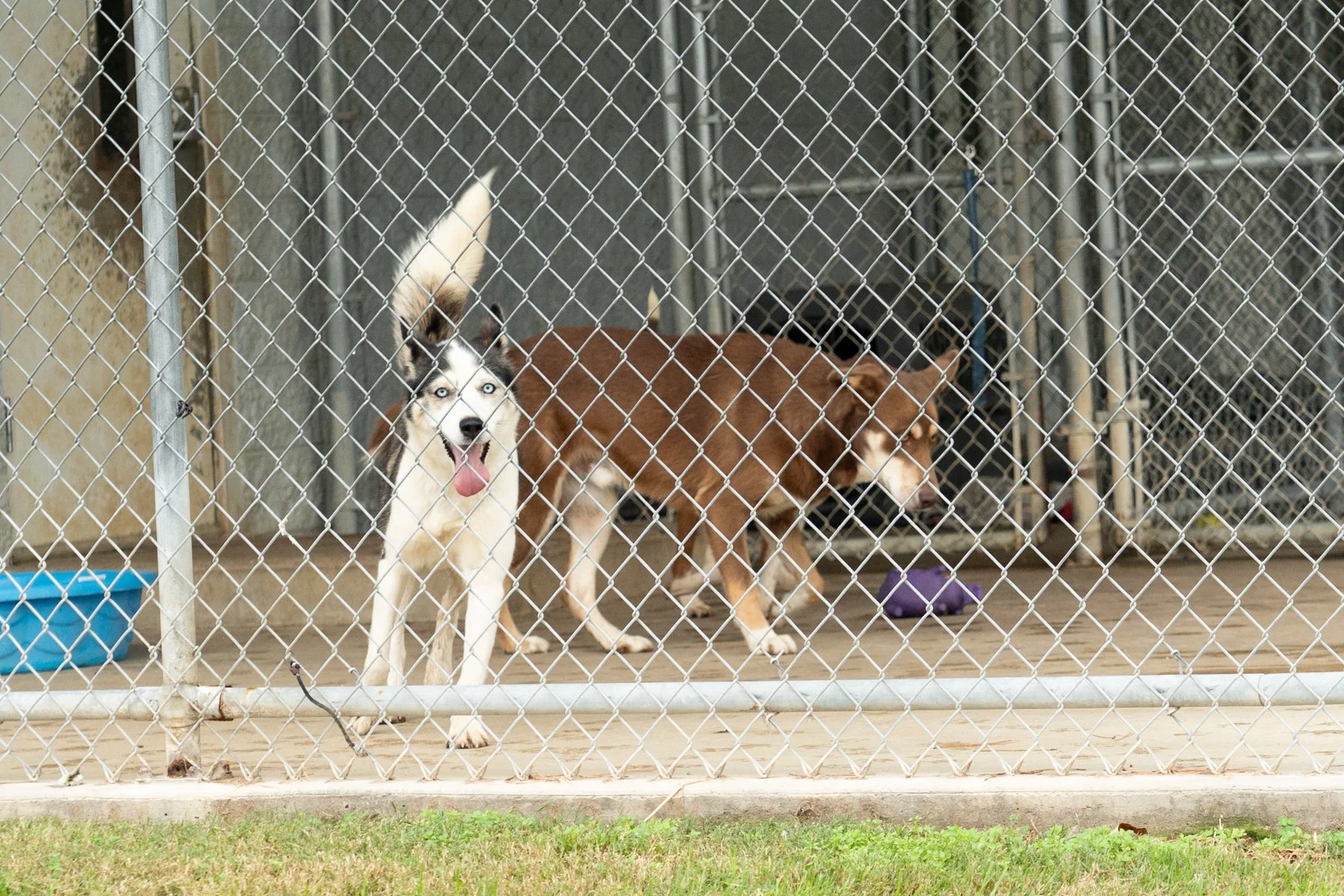
DeKalb is a true open intake shelter. This means they do not turn people away, even if they are full. They make the heartbreaking decisions necessary when there are more animals that need help and nowhere to put them. Leslie has been doing this long enough to know what becomes of the animals turned away. The average length of stay is about a month. Pitbulls and black dogs are the most likely to be euthanized due to space constraints.
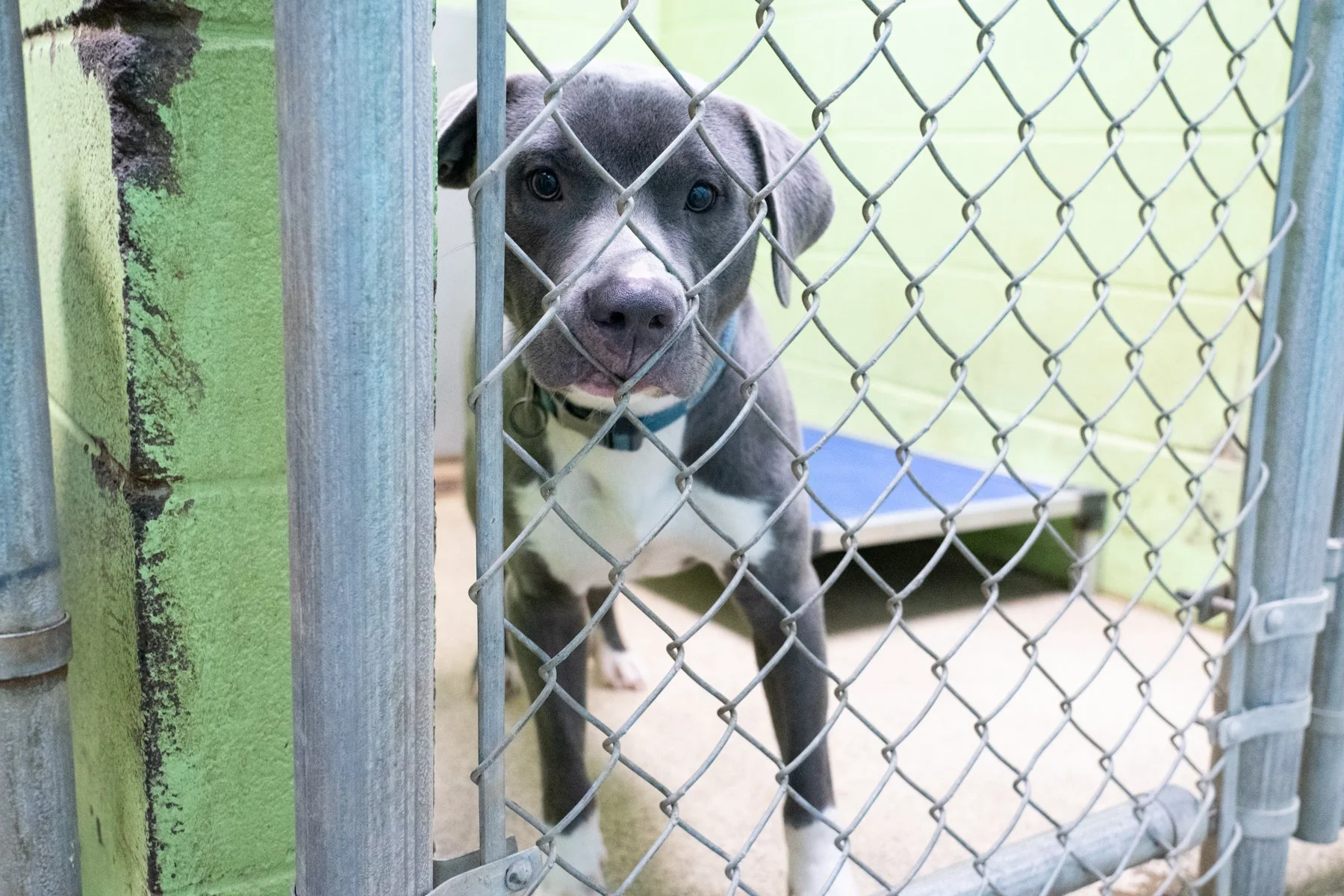
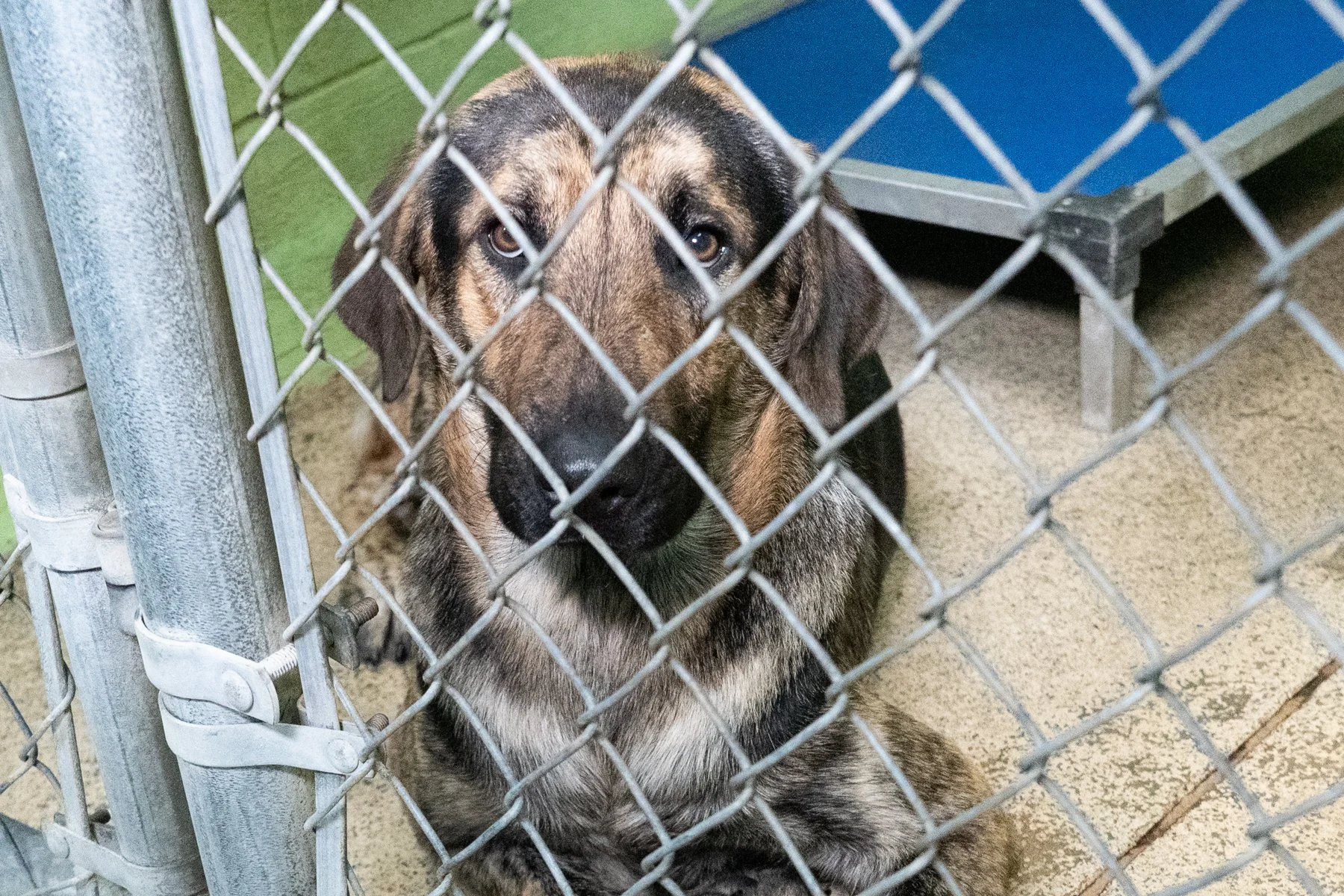
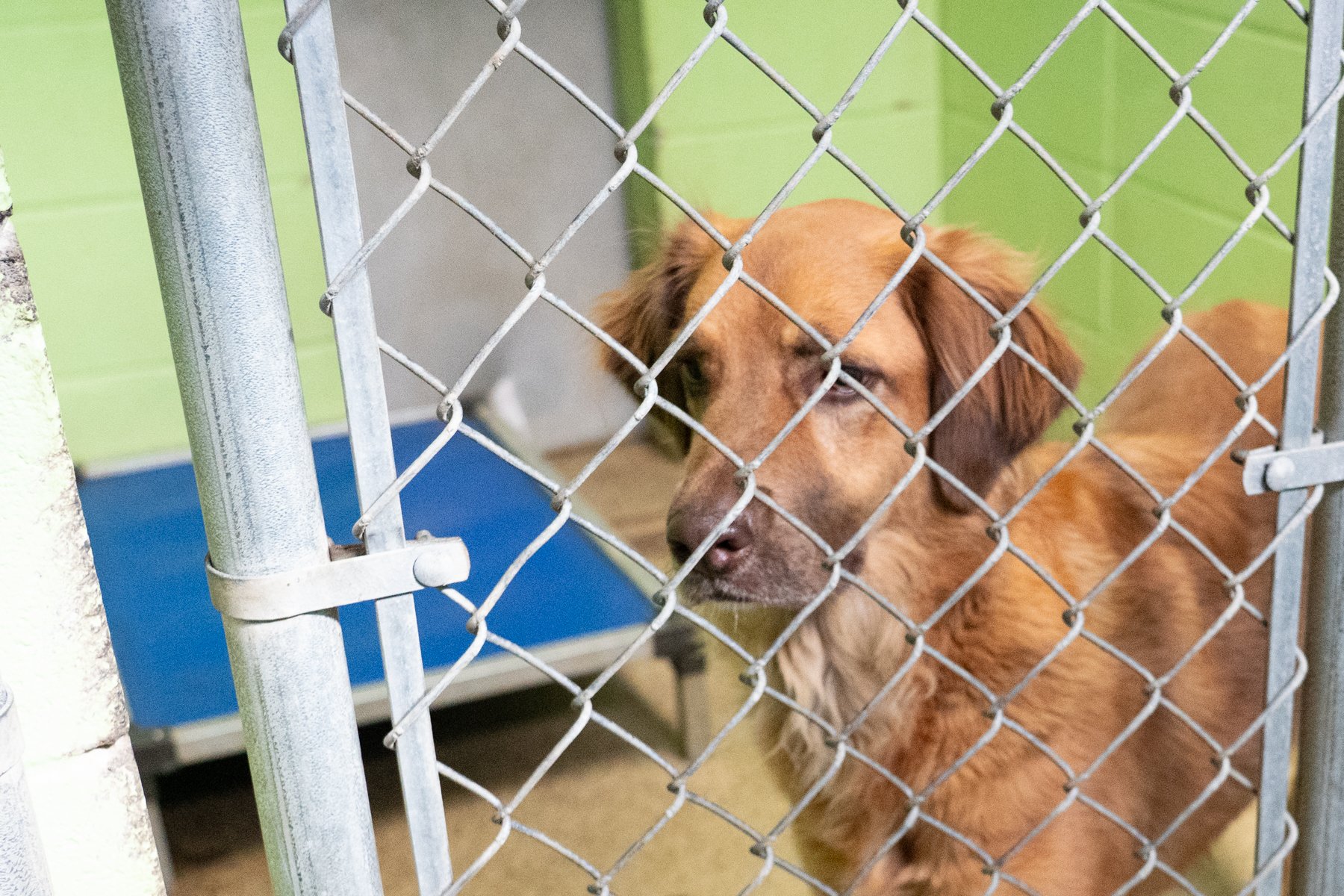
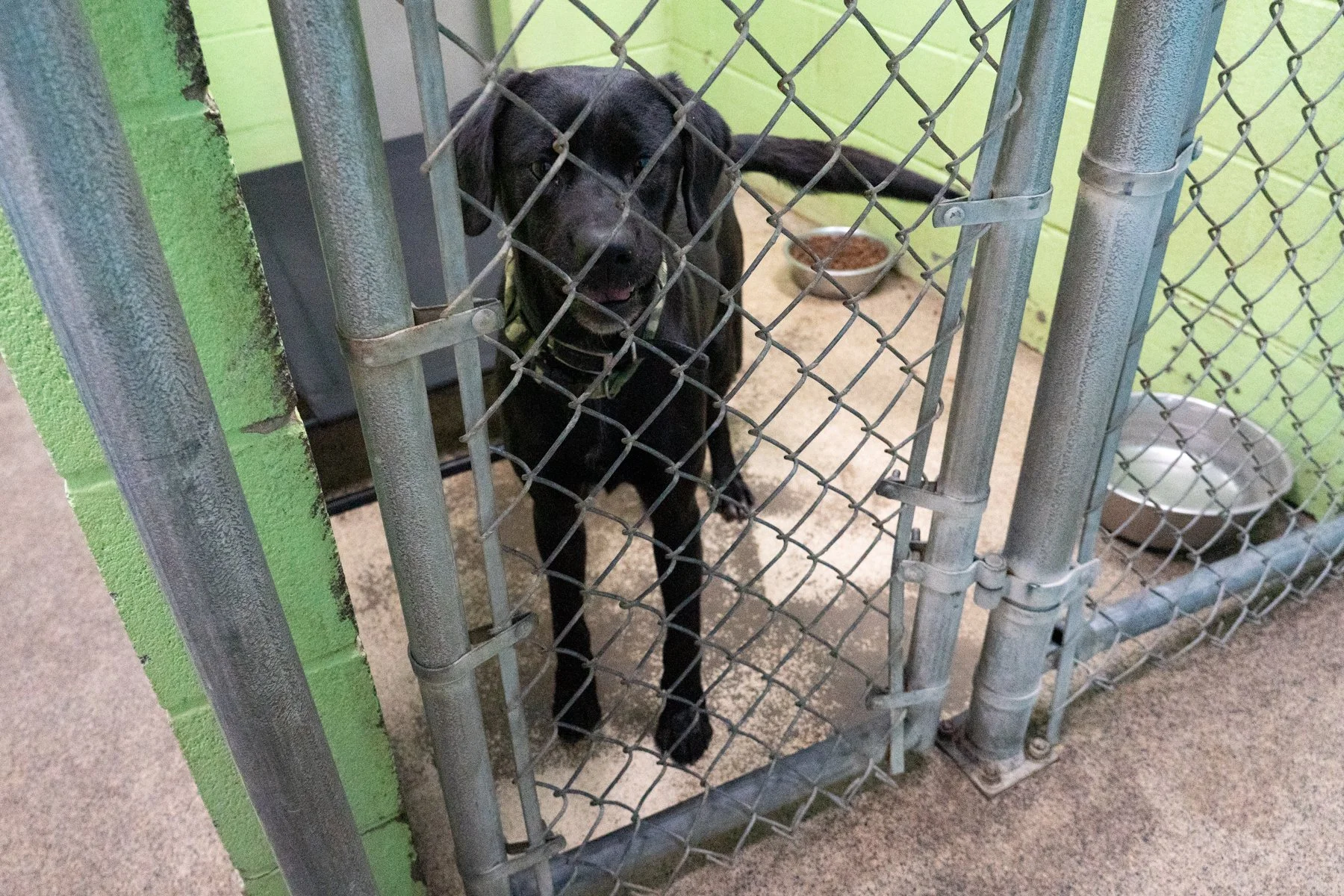
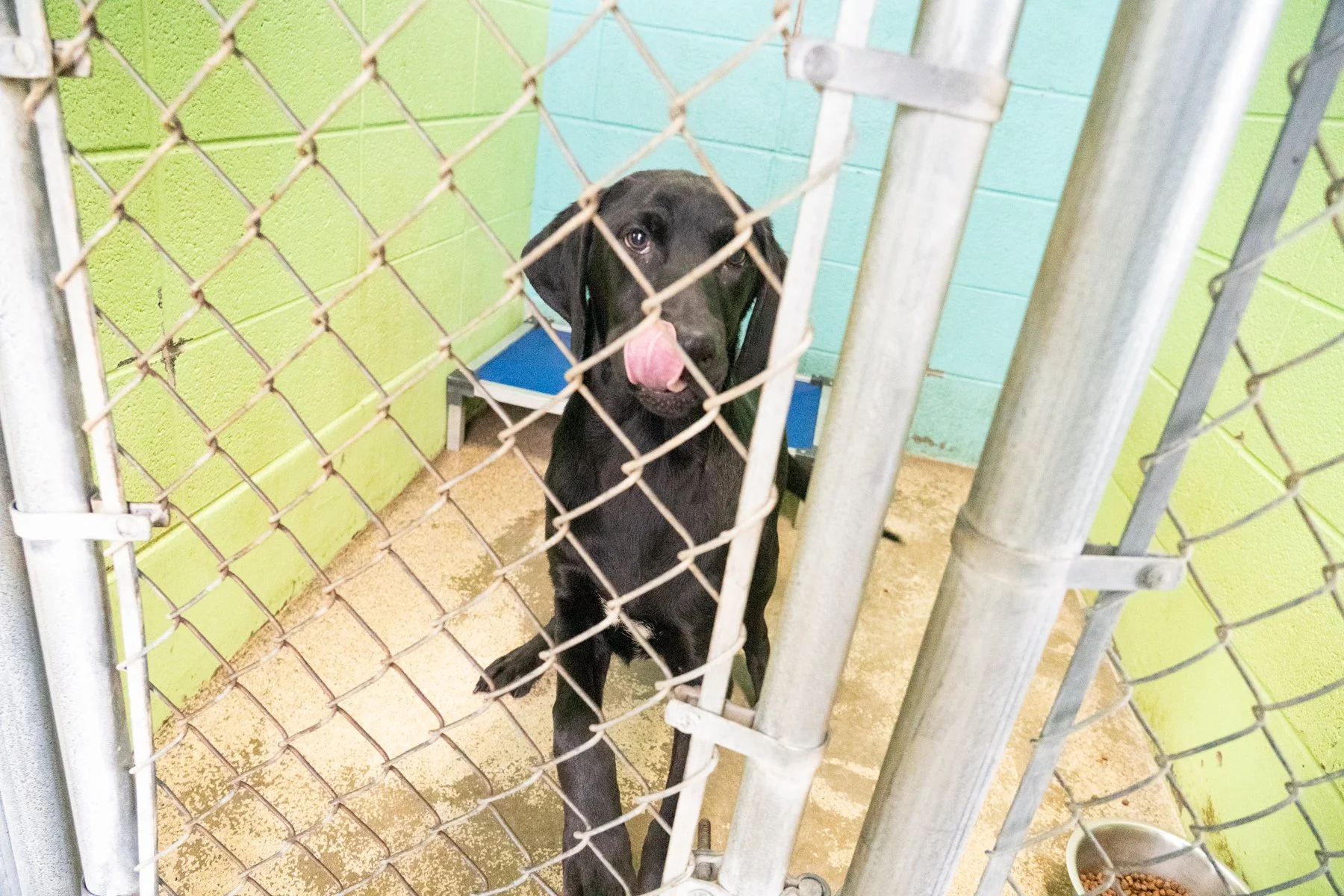
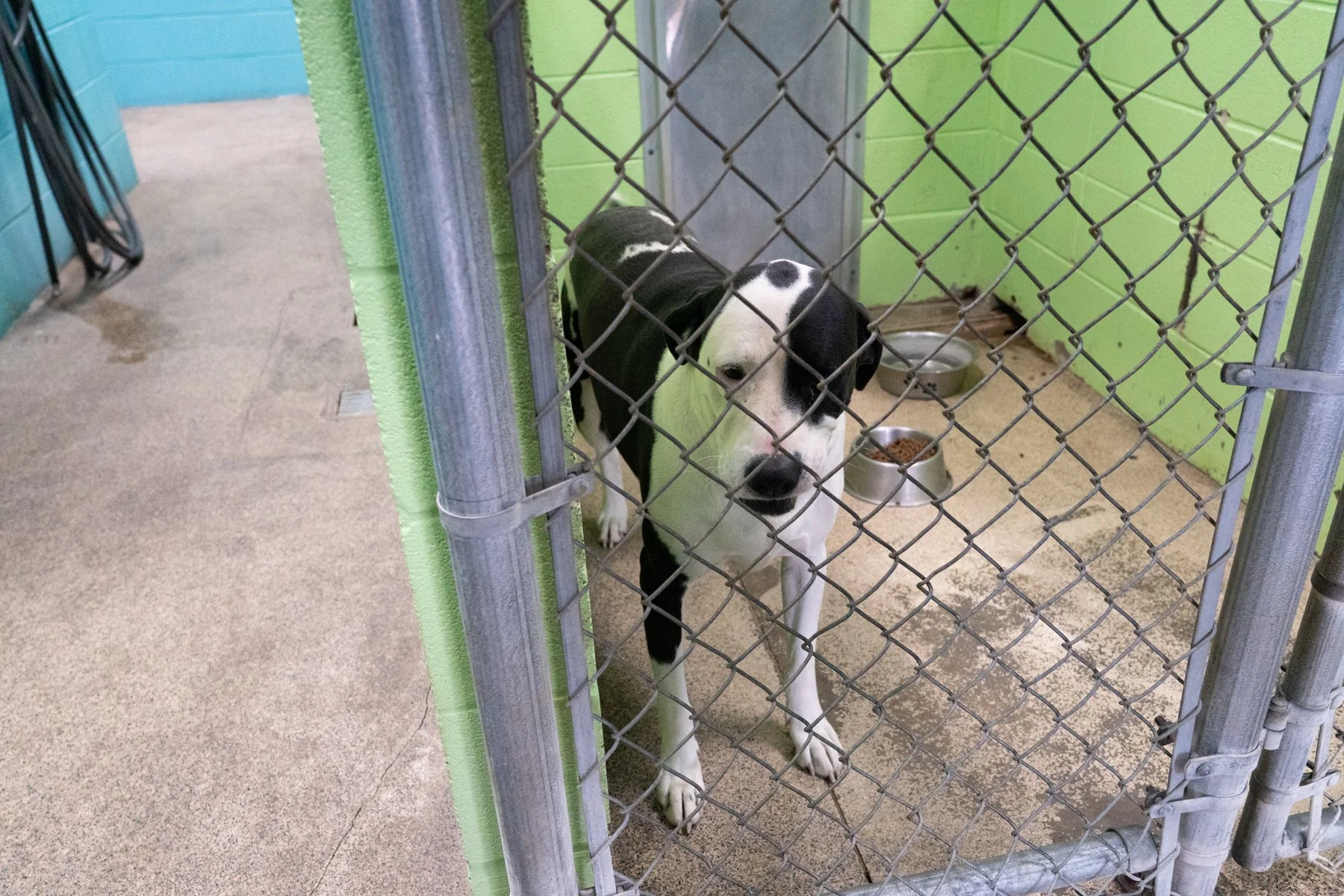
Our country is in an animal overpopulation crisis. This crisis is a result of a lot of things – but one driver is our fixation on a 90% Live Release Rate, instead of focusing on fixing the problem. Sadly, animals don’t just disappear, and people don’t just do the right thing, because we tell them the shelter is full.
In DeKalb, the municipal budget covers food, supplies, spay/neuter, microchipping, and basic vetting. It does not cover heartworm preventatives, so unless requested by the rescue or adopter, they do not test for heartworm. (There’s no reason to test if you are not going to treat or give preventatives.)
The four staff members (including just one ACO for the entire county) do all of the care and cleaning. They are supported by an active and engaged Friends of DeKalb County-AL Animal Adoption Center group, who also assist community members – helping with vet bills, food, and spay/neuter surgeries.
Amy, the secretary of the board of FDCAAC, met us at the shelter and joined us for the tour. She helps at the shelter in all kinds of ways and has foster-failed a perfect six out of six times. It was her invitation that brought us to DeKalb County.
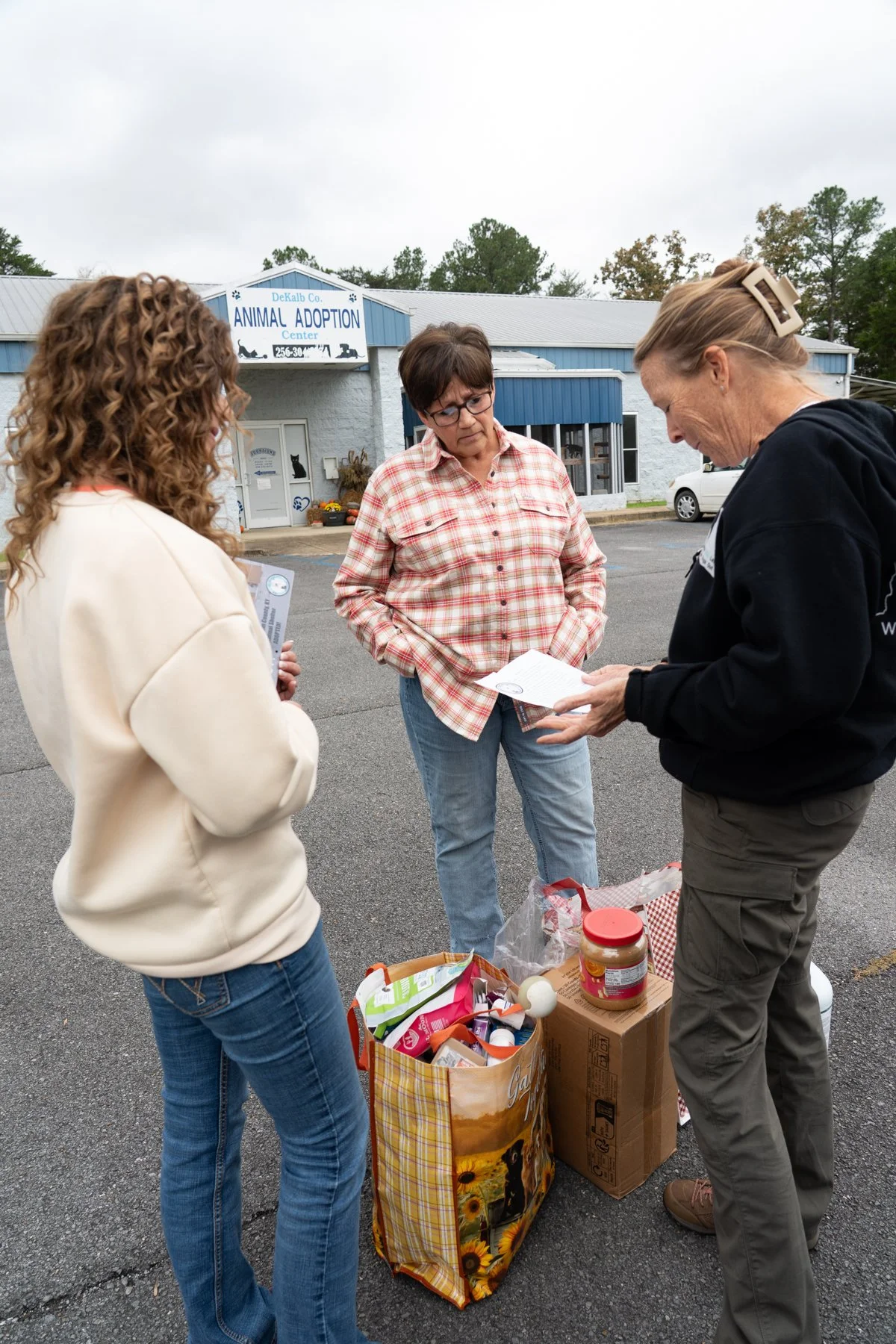
Despite the gray day, the shelter had a bright, friendly feel. Amy donated and dressed up the entrance with welcoming pumpkins and straw bales. Visitors are welcome at the shelter, which is open 9am to 4pm weekdays.
In the shelter lobby, there are posters of the dogs in foster care and a binder showcasing adoptable dogs in the shelter and in foster care. The shelter has a meet and greet area for potential adopters to meet animals.
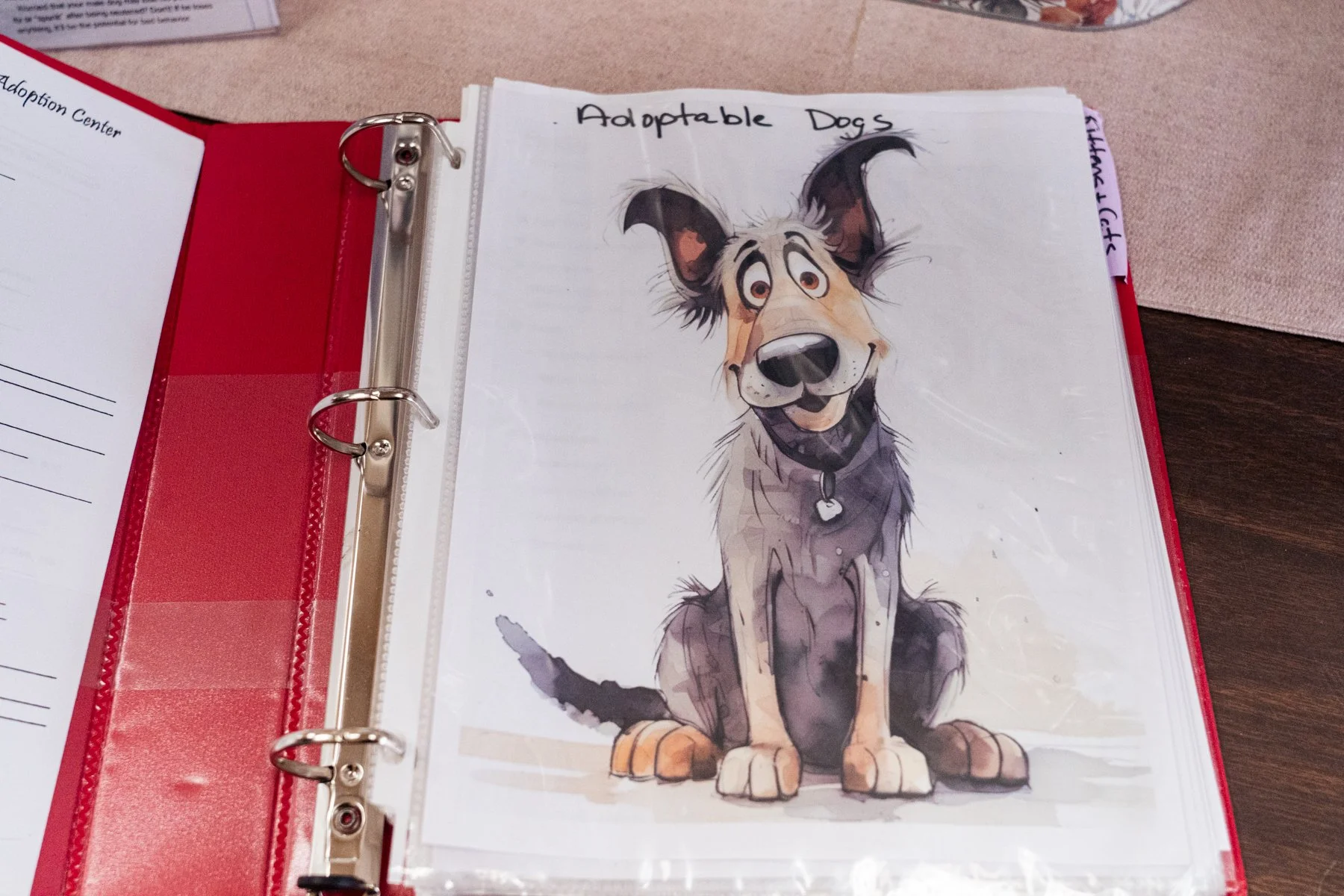
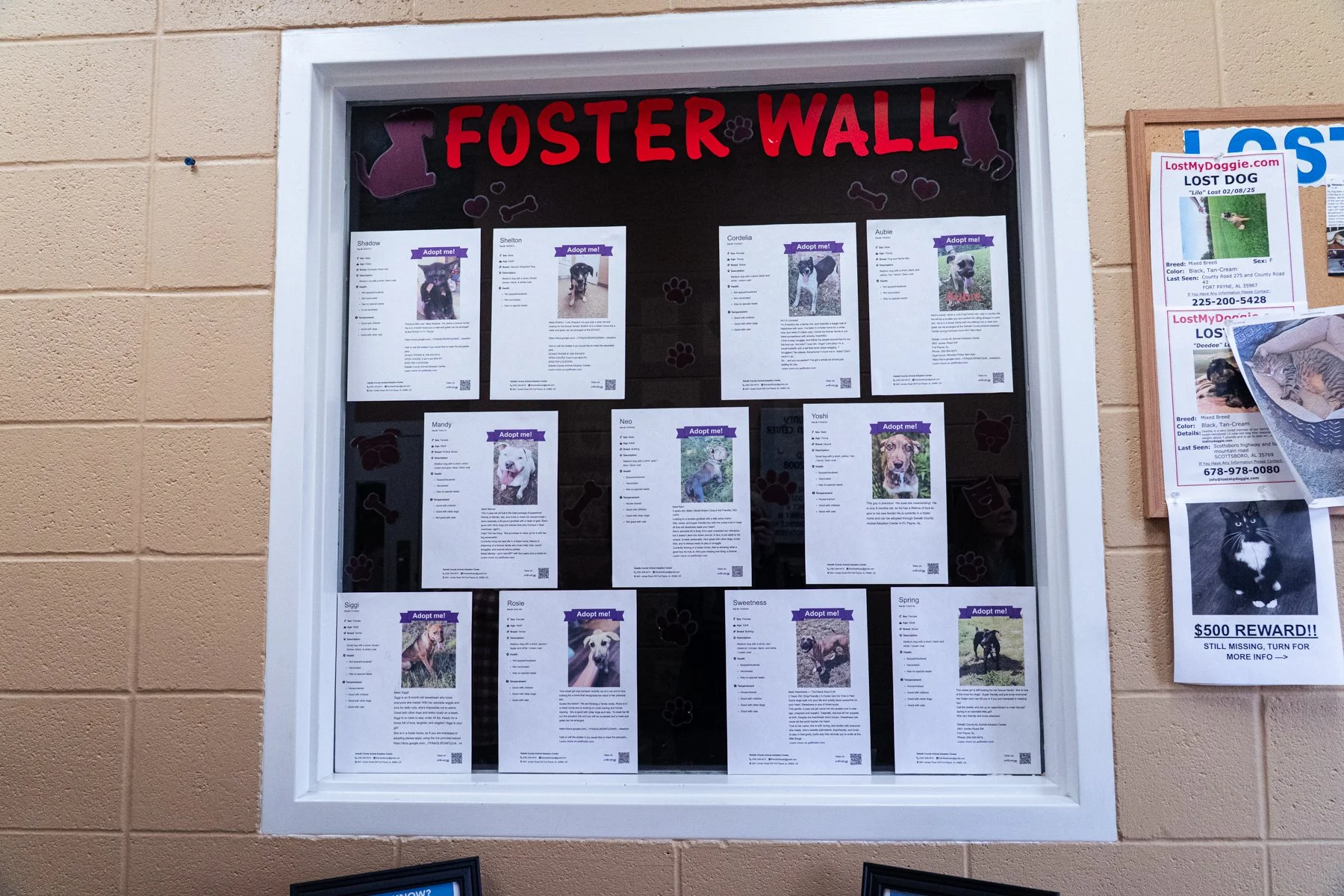
The shelter was built in 2008 and is set up in traditional cinderblock and chainlink kennels. The guillotine doors are closed to double the space, allowing the building to house 44 dogs at a time.
3000 animals seem like a lot for this small rural area. Many of the surplus animals come from the Collinsville Trade Day Flea Market, a local flea market that permits the unregulated sale of dogs and puppies, many of whom are sick, unhealthy, or stolen.
The Friends of DeKalb County Animal Adoption Center group is active and holds adoption events and fundraisers. They host dog yoga outside near the dog play area and cat yoga in a nearby gym with shelter animals joining them.
The group has begun talking about education, knowing it’s the key to bringing change in DeKalb County. Curating a public that can be responsible pet owners is critical everywhere if we want to address the root problem. Rescue transports have been a lifeline for many, but they continue to shrink as northern states and populated areas face their own stray crisis and shelter crowding.
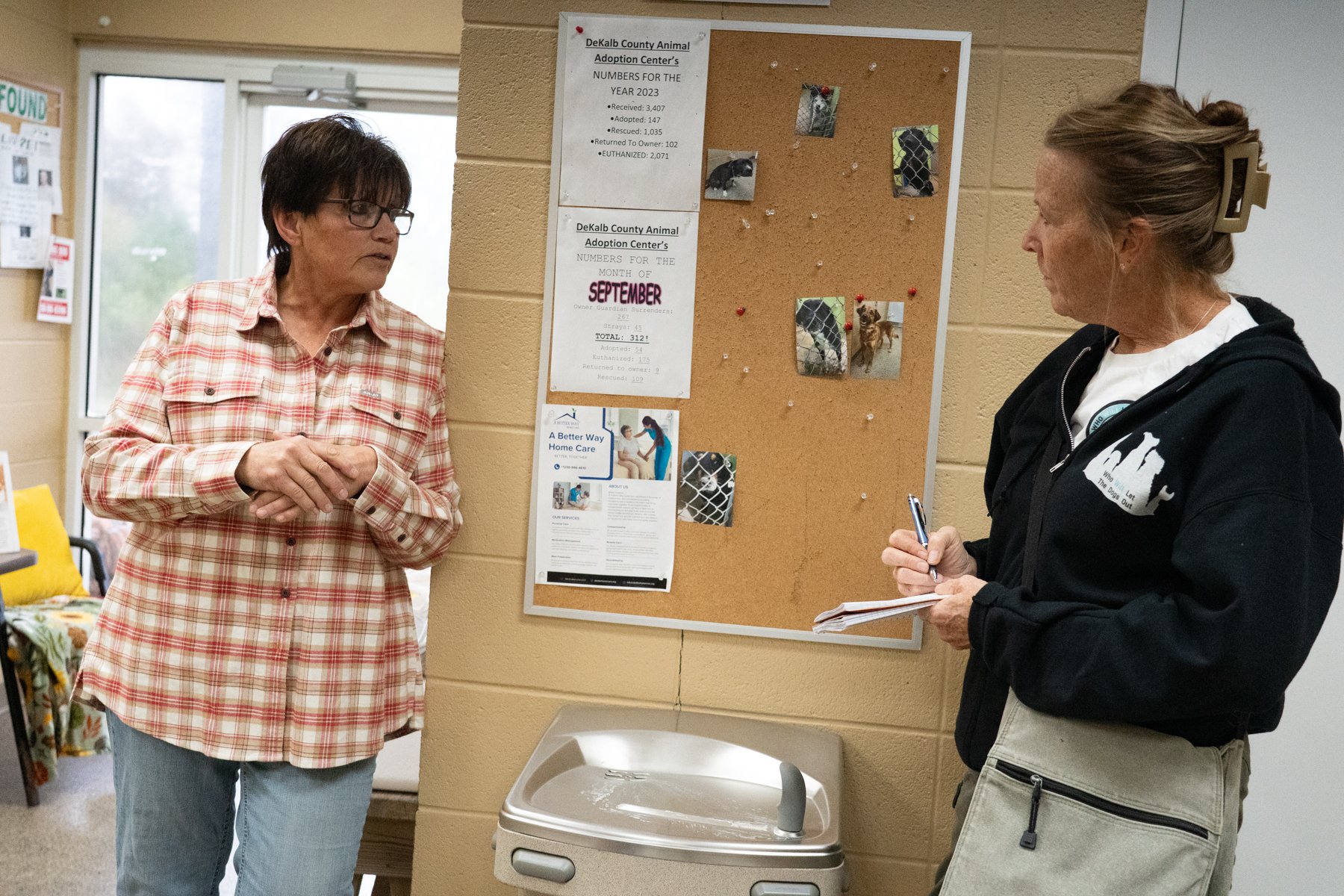
The 50% live release rate has held pretty steady over the years, even as the animal numbers have crept up. Though it is hard to hear, the shelter’s willingness to be transparent about the situation is admirable. The numbers for 2023 were posted in the lobby.
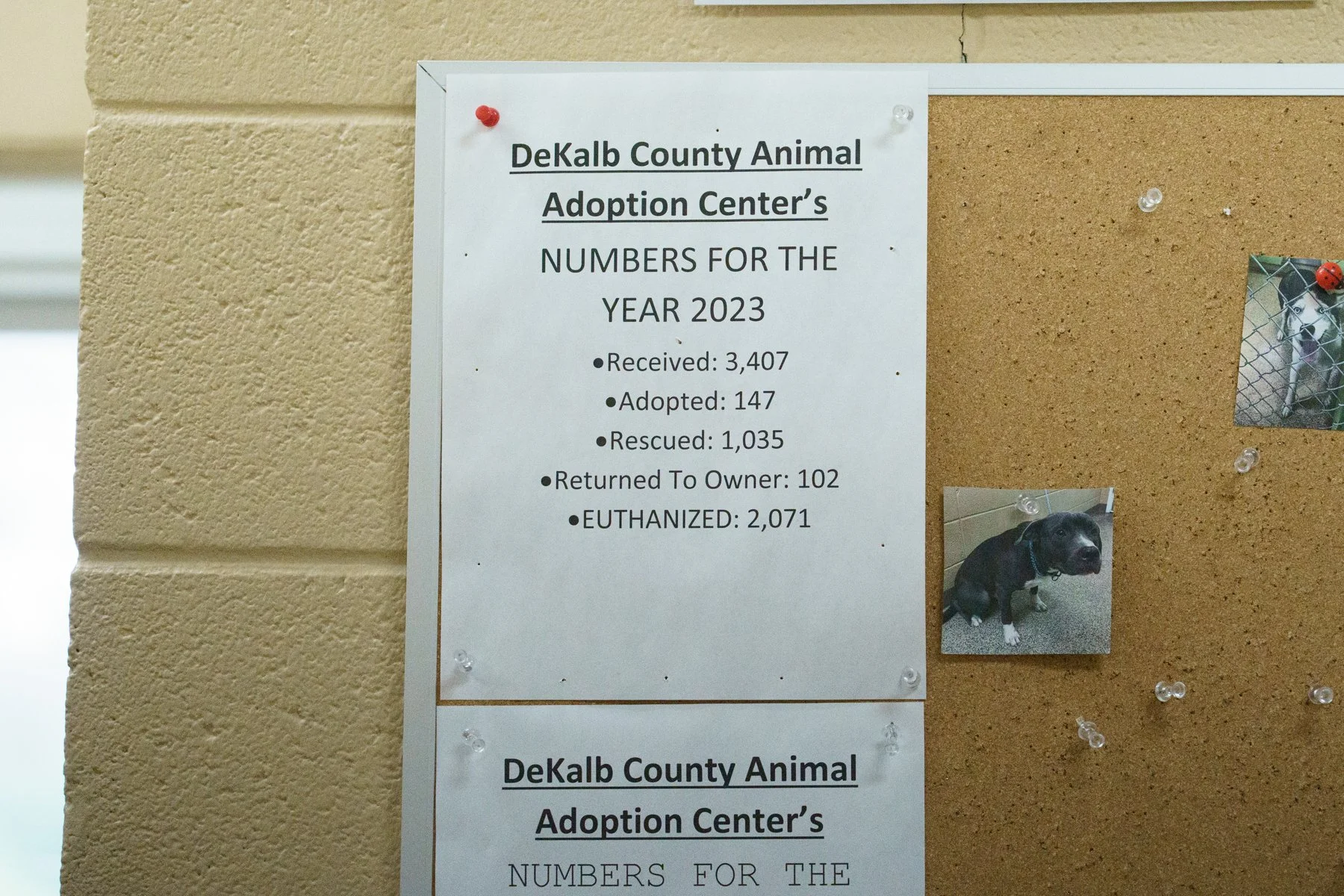
This challenge does not belong to the shelter alone; it belongs to the community. There is plenty of work to be done, but that work begins when a shelter opens its doors to every animal in need and shares that burden with its community. Saving the dogs in any area should include all the dogs – not just the ones inside the shelter. 80% of dogs brought to a shelter are not spayed or neutered. Closing to intake, while enabling a shelter to euthanize fewer dogs, will only exacerbate the problem and lead to increased strays and more animals suffering.
It was refreshing to visit a shelter where the reality of our current situation in animal welfare is being faced head-on. With a staff committed to excellent care and a Friends of group committed to helping change the story, DeKalb County has the potential to solve its animal crisis.
Educating its community, creating ordinances to prevent situations like the Collinsville market, and engaging the public in the work of the shelter are just a few of the steps needed to make this county a truly humane place for animals.
If you’d like to support the work of the DeKalb shelter, consider shopping their Amazon wishlist: https://www.amazon.com/hz/wishlist/ls/19666C596AH22
You can also help raise awareness by following/commenting/sharing our content and connecting with us on Facebook, Instagram, YouTube, and TikTok.
Did you know we have a podcast? Who Will Let the Dogs Out: The Podcast Be sure to subscribe, review, and share!
For more information on any of our projects, to talk about rescue in your neck of the woods, or partner with us, please email cara@WWLDO.org.