Giving Dogs a Break From the Shelter
Short breaks from the shelter, whether it’s a walk, a day trip, a foster stay, or a community event, can dramatically change a dog’s path. When dogs are seen out in the real world, they are perceived very differently than when they’re behind kennel doors. In a home, on a sidewalk, or at a local coffee shop, they appear more relaxed, more relatable, and ultimately more adoptable. That simple shift in environment helps potential adopters envision the dog as part of their own lives.
Equally important is the impact these outings have on the dogs themselves. Regular human interaction is essential to a dog’s emotional wellbeing. Even brief experiences, like a car ride or a walk in a park, can reduce stress and improve behavior. Dogs are social by nature, and extended isolation in a kennel environment can take a serious toll. Giving them time outside allows them to decompress, build confidence, and practice basic social skills like walking on a leash, meeting new people, and navigating unfamiliar settings.
These experiences also expand the pool of potential adopters. Many people never step foot inside a shelter, whether due to time constraints, emotional hesitation, or preconceived ideas about rescue animals. But when dogs are out in the community, they meet people where they already are. Casual, real-life interactions often lead to meaningful connections, and in many cases, adoptions. Time and again, dogs who might otherwise be overlooked find homes simply because someone met them outside the shelter.
For shelters and rescue organizations, making these outings accessible should be a priority. Removing barriers is key. This can mean offering flexible hours that align with when people are actually available, creating simple “check-out” systems for volunteers, and providing clear guidelines so individuals can safely handle dogs at different experience levels. Equipping volunteers with supplies and trusted dog-friendly locations further sets everyone up for success.
Fostering should also be treated as a central strategy, not an afterthought. When fosters are supported with supplies, guidance, and veterinary and behavioral resources, they become powerful advocates for the dogs in their care. They can help tell each dog’s story through photos, videos, and honest insights, while also helping identify the best possible home. Recognizing and celebrating fosters, both publicly and privately, helps grow this critical network.
Finally, taking dogs into the community through creative events can make a meaningful difference. From festivals and group walks to fun runs and small local gatherings, these opportunities not only enrich the dogs’ lives but also increase visibility in a way that feels approachable and engaging to the public.
Research supports what many in rescue already see every day. Even short breaks from the shelter can lower stress levels, improve sleep, and significantly increase a dog’s chances of adoption. Dogs who participate in outings or short-term fostering are far more likely to find permanent homes than those who remain in the shelter full time. Simply put, getting dogs out, even briefly, can save lives.
It’s also worth noting that companionship matters inside the shelter as well. Dogs housed with other compatible dogs often show lower stress levels and are adopted more quickly than those kept alone. Whether inside or outside the shelter, connection is a powerful driver of wellbeing and, ultimately, of successful adoption.
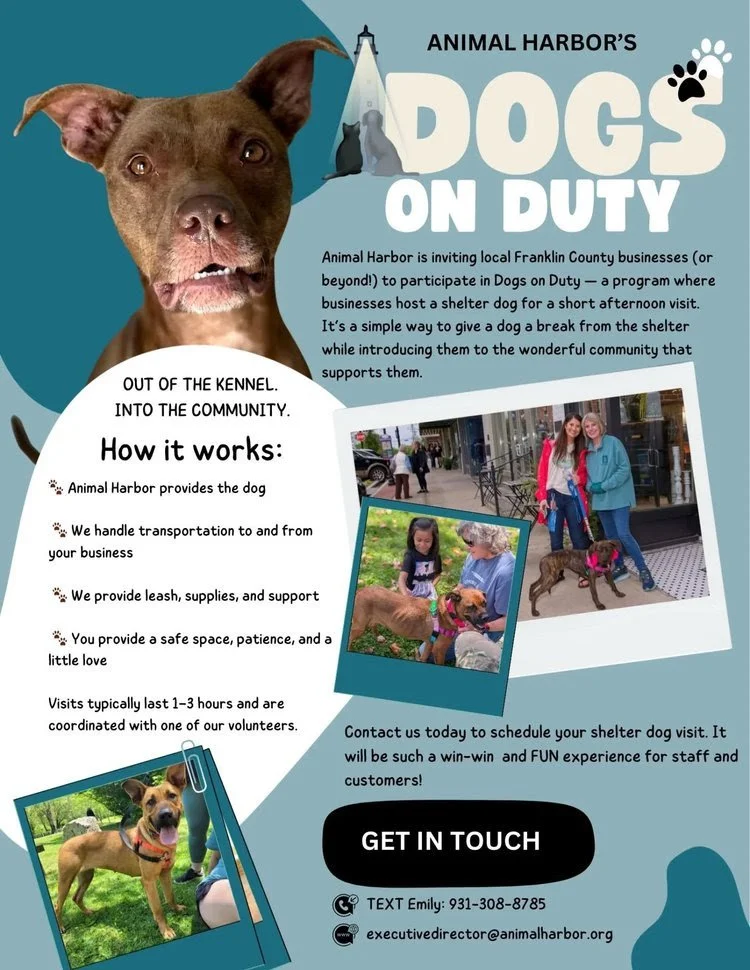
Animal Harbor in Winchester, Tenn., has come up with a unique way to help lower shelter stress in its dogs: Send them to work. Called Dogs on Duty, the program allows businesses to host a shelter dog for a one- to three-hour visit. Animal Harbor drives the dog to and from the business and provides all supplies. The only requirement from the business? Showering the dog with love.