

The Animal Shelter System Is Broken: It’s Time for a Real Conversation
The current shelter system is not working. It is failing on nearly every level:
The number of animals euthanized yearly climbed for a fourth year in a row (after decades of decline).
Stray populations are growing exponentially.
Shelters are operating at capacity or beyond; many are frequently closed to intake.
Rescues are overwhelmed with dogs staying longer, expenses going up, insurance becoming prohibitive, and barriers to transport increasing in many states.
Residents cannot find help with pets they can no longer care for.
Incidence of rabies, dog bites, and maulings is on the rise.
How did we get here?
Municipal Shelters have not grown or evolved as the population they serve has expanded and the number of residents with pets has increased.
Spay/Neuter has been deprioritized in too many places, while costs have gone up and accessibility has decreased.
The No-Kill movement has devolved from a set of practices to a number upon which shelters are rewarded or condemned.
Many municipal shelters no longer practice open-intake policies, removing the only safety net for too many animals.
In striving to reach the No-Kill number, rescues and shelters have adopted out dogs who are behaviorally unsafe and/or warehoused dogs for months and years.
Pet-friendly housing has become hard to find and/or is financially out of reach for too many.
For these reasons and more, it’s time to create a shelter system that serves the public and builds a humane community for all. That means creating not just new protocols, practices, and expectations, but new ways to measure success and language that doesn’t mislead or confuse the public.
We’ve invited two experienced animal shelter/welfare professionals, Lisa Milot and Roxanne Hicks, to begin what we hope will be a series of ongoing conversations about what Responsible Sheltering for a Humane Community looks like.
Lisa Milot is an attorney, shelter advocate, and the inaugural Director of Vermont’s Division of Animal Welfare. She began her welfare journey as a shelter volunteer before founding Athenspets, a nonprofit focused on shelter medical care and targeted spay-neuter programs. As a law professor, she directed the University of Georgia’s PAWS clinic, using a $1.4 million grant to conduct data-driven research on improving shelter adoptability and launching community vet clinics. Today, she leverages her deep, shelter-aligned background to modernize and centralize Vermont’s emergency rescue response and animal cruelty systems.
Roxanne Hicks is a leading animal welfare advocate and shelter operations specialist. As Director of the Edgewater Animal Shelter, she transformed a local nonprofit with municipal contracts into a highly efficient, community-supported operation with exceptional care standards and strong live-release rates. Recognizing the systemic challenges facing rescue workers, Roxanne founded The Shelter Shift, an advocacy platform and podcast where she coaches shelter leaders nationwide. She is a passionate advocate for industry reform, championing operational flow, staff burnout prevention, and modern intake strategies.
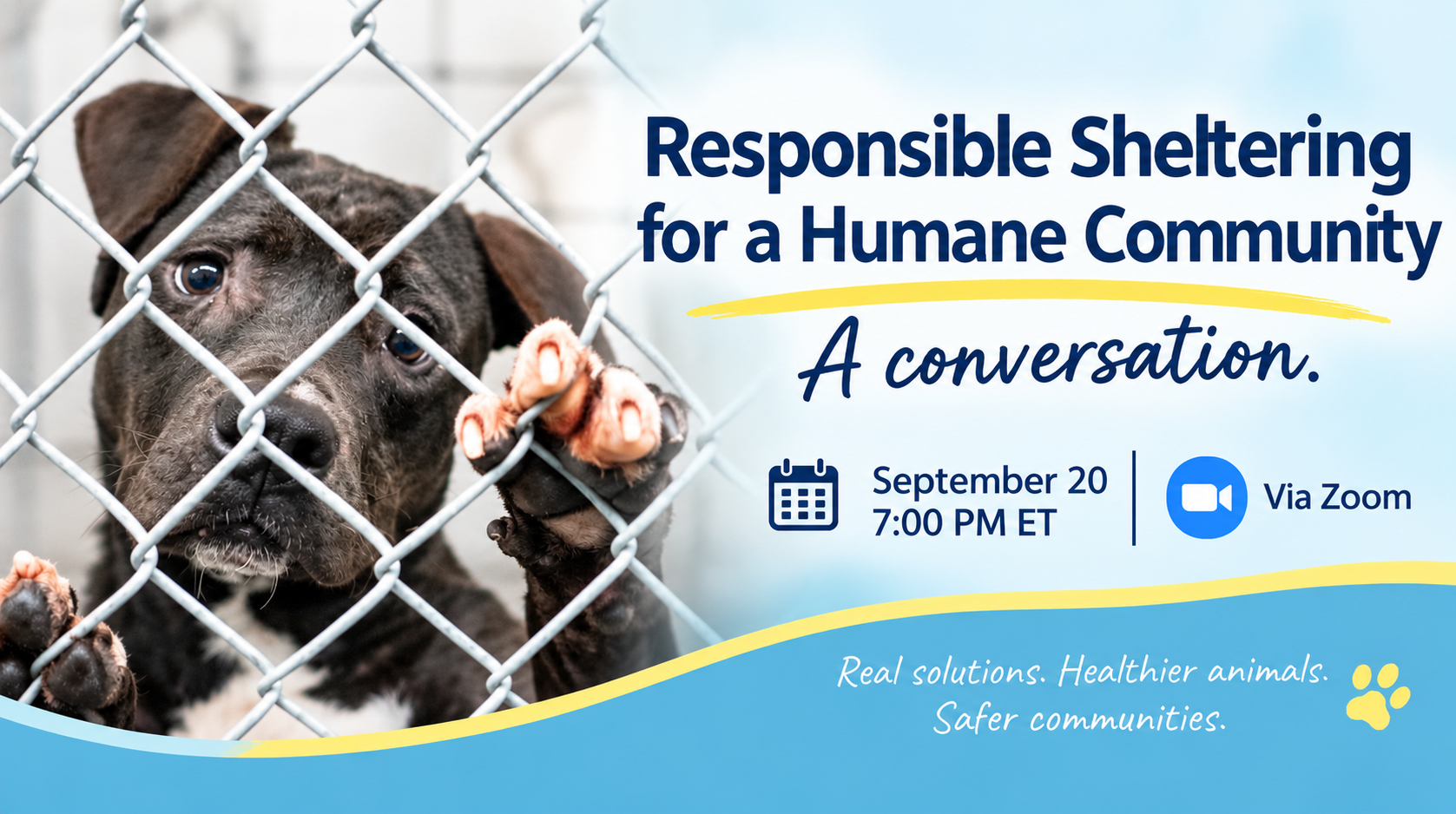
Join us Sunday, September 20, at 7pm for a Zoom conversation. Please register below and bring your questions (or submit them beforehand to Cara@WWLDO.org).
Click here to register!
Spread the word!
After the Webinar, we invite you to continue the conversation on Facebook at WWLDO Shelter Solutions and Support.